





David SilverbergBusiness reporter


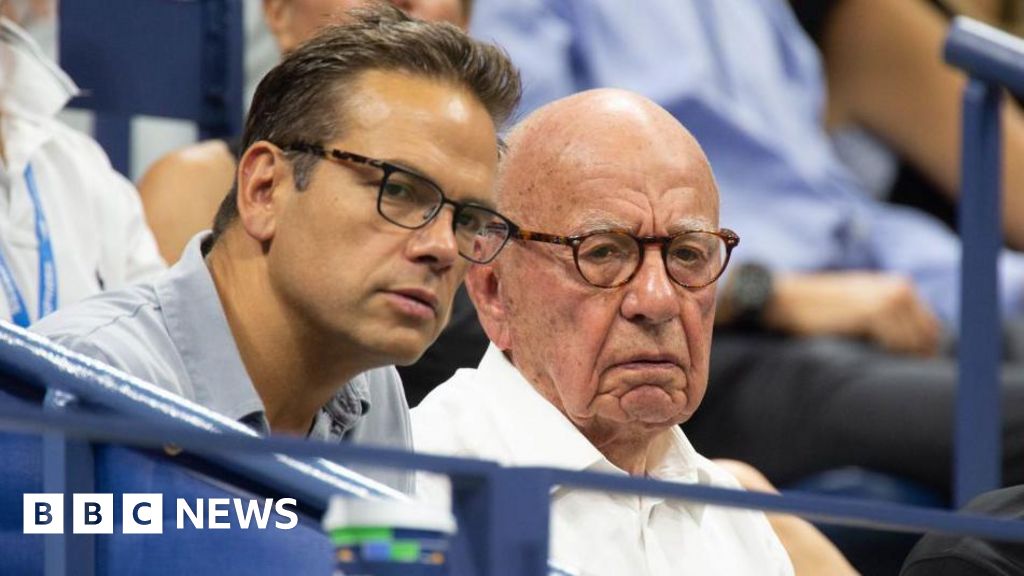
When Rupert Murdoch and his children finally reached a deal earlier this year to end the years-long succession battle over the media mogul’s empire, the high-profile saga offered a valuable lesson for every family-run company.
The clear message was that such firms need a thorough plan in place for how the business is handed over to the next generation, or else they could be mired in emotional and legal drama.
Here three family-owned and run companies, from both sides of the Atlantic, reveal how they have approached the succession issue.
Biscuit-maker Walker’s Shortbread is one of Scotland’s largest food exporters, with its tartan-coloured tins and packets a regular sight at supermarkets and airports around the world.
It was founded back in 1898 by Joseph Walker, and today his great-grandson Nicky Walker holds the top managing director position.



Mr Walker says the business operates what it calls a “cousins consortium” model.
What this means, he explains, is that all members of the extended Walker family, and especially their children, are encouraged to join the business. And each is allowed to have a say on where they would ideally position themselves in a managerial role.
“Our succession plan essentially says that if you want to come into the business, there’s a role for you here,” says Mr Walker. “And since the company’s expanding, there’s a whole career to be formed and honed here.”
He adds that when “points of contention” do come up, the aim is always to reach a consensus. “We have always reached decisions based on what is best for the company… with the firm understanding that the business always comes first.
“With the understanding that a unity of voice is of paramount importance, an acceptable outcome has always been achieved.”
The company is also not averse to bringing in external experts, such as engaging with professional advisors on the formal, legal accept of succession planning, and the formation of an executive board with directors who are not family members.
Building a succession plan to bridge the gap between the skills in a business today and those needed tomorrow is critical for family businesses, says Charlie Grubb, a senior managing director at global recruitment company Robert Half.
“Emotional and personal dynamics can be a real challenge for family businesses when it comes to succession planning. There’s a skill in being able to take that emotional family tie out of the decision-making process, and recognise there are family and leadership roles, and those might be quite different from each other.”
But too often, companies fail to look ahead. More than four in 10 business leaders haven’t identified someone to take over their role when they decide to move on, according to a survey in Canada this year by Robert Half.
Meanwhile, a separate 2025 report found that a lack of succession planning “could lead to increased business closures, job losses, and economic uncertainty”.

Mike Bronner is boss of California-based Dr Bronner’s, well known in the US for its soaps, lotions and toothpaste. His grandfather Emanuel Bronner, who founded the business in 1948, didn’t set up any paperwork for how it should be operated when he had to step away in the 1990s due to declining health.
Emanuel Bronner, who died in 1997, also ran afoul of the Internal Revenue Service, and left the family firm with a $2m (£1.5m) tax bill.
“We learned from that,” says Mike Bronner. “And ever since we began thinking about the next generation, and how to ensure that two generations down the line we are still going to function with the same values we have today.”
As for his own succession plan, Mr Bonner says he’s seeing signs his children are interested in running the company. “My son Mike said he wants to be CEO and I asked him why, and he said, ‘Well, I love the mission and the free lunches’.”
What helps with succession planning is involving children early in the business. At St James Town Steak and Chops, a butchers and delicatessen in downtown Toronto, owner Mark Michelin has been training his two children, Noah and Alex, both in their mid-20s, to captain the 54-year-old family-run ship once he retires.
“It’s best for us to have the business stay in the family,” says Mr Michelin. “And that blood bond is something our customers appreciate, too.
“They often say to me, ‘Oh wow, this is a third-generation family business, and I loved how your dad gave me some deli meats for free when we came in as kids’.”

Back in the Scottish village of Aberlour, Nicky Walker says he firmly believes “that owning and managing a generational family business is an unbelievable privilege. And to have the opportunity to lay the foundations to be succeeded by our own family is fantastic but should never be taken for granted.
“The advice I would give, from my own journey, is that the full support and the great deal of guidance and nurturing I was offered was exceptional. And it is now incumbent upon myself and my generation to, in turn, offer the same, to the next generation.
“We need to offer them unequivocal support, and that is a message I would pass, with respect, to any family business.”