





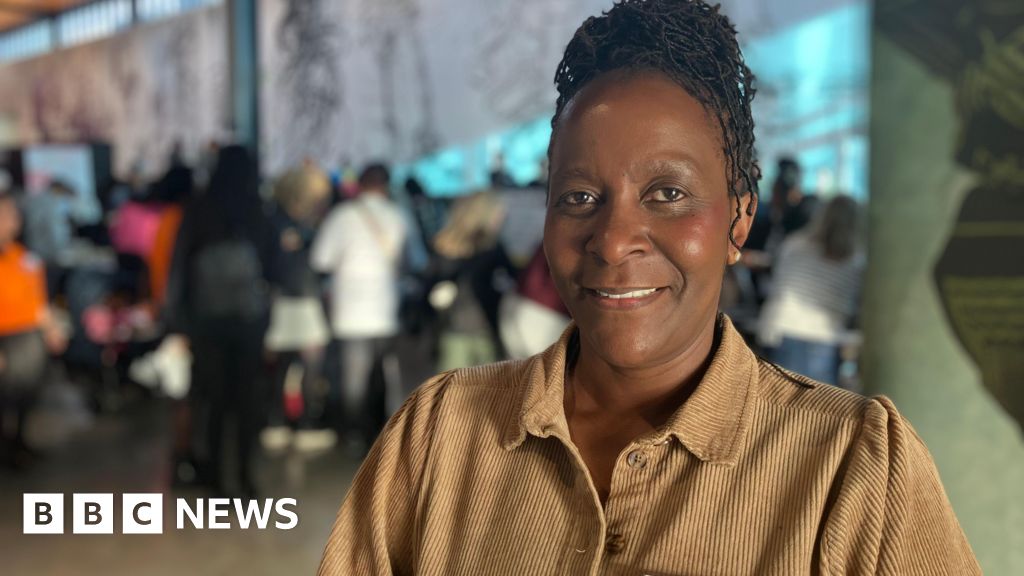

Researchers, support organisations and survivors of domestic abuse have been sharing experiences of gender-based violence in black and minority communities.
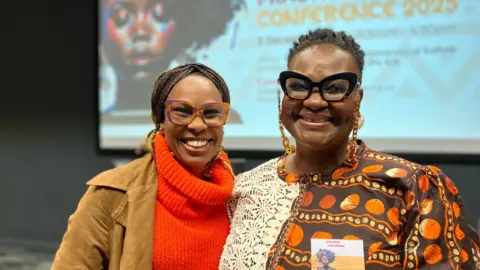
The second annual Gender Justice and Intersectional Practice conference was organised by the charity Phoebe, based in Ipswich.
Mollin Delve, founder and CEO, said she was “really pleased” the conference had attracted so many public sector professionals – such as local council housing officers – who were “interested to learn more”.
About 200 people attended the day-long event on Wednesday at The Hold on the Ipswich waterfront.


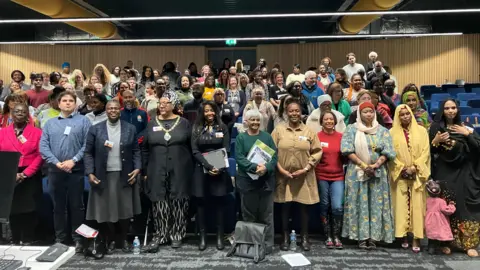
The programme included video messages from Dame Nicole Jacobs, the domestic abuse commissioner for England and Wales, and Sahle-Work Zewde, former president of Ethiopia.
There were also presentations from support organisations and academics, along with a performance reflecting lived experiences of violence and displacement from a Sudanese women’s group.
Reverend Valerie Lolomari, from Women of Grace UK, said the conference was important for connecting people.
“It makes the minoritised women, who are suffering from mental health and isolation, know that there’s somewhere to go,” she said.
“This opens our eyes to understand the difficulties that women are going through behind the scenes; the shame, not understanding the culture, the stigma.”
Invisible women made visible
Sanskriti Sanghi, from Southall Black Sisters, presented their latest research Invisible Women Made Visible, documenting experiences of femicides of black, minoritised and migrant (BMM) women.
The report says:
- In the UK, a woman is killed roughly every three days
- One in five homicides are domestic
- Over the past decade, 78% of women killed in domestic homicides were murdered by a partner or ex-partner
- More than nine out of ten women killed, were killed by men
However, BMM women are disproportionately affected.
Of the 369 female domestic homicide victims recorded by the UK government between 2020 and 2024, 88 (24%) were from BMM backgrounds (who formed 18% of the UK population in the 2021 census).
It goes on to share detailed testimony from bereaved families and has a list of recommendations for accountability, visibility and systemic reform.
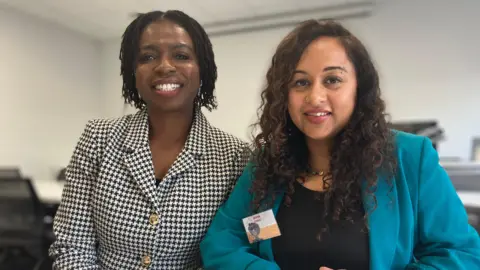
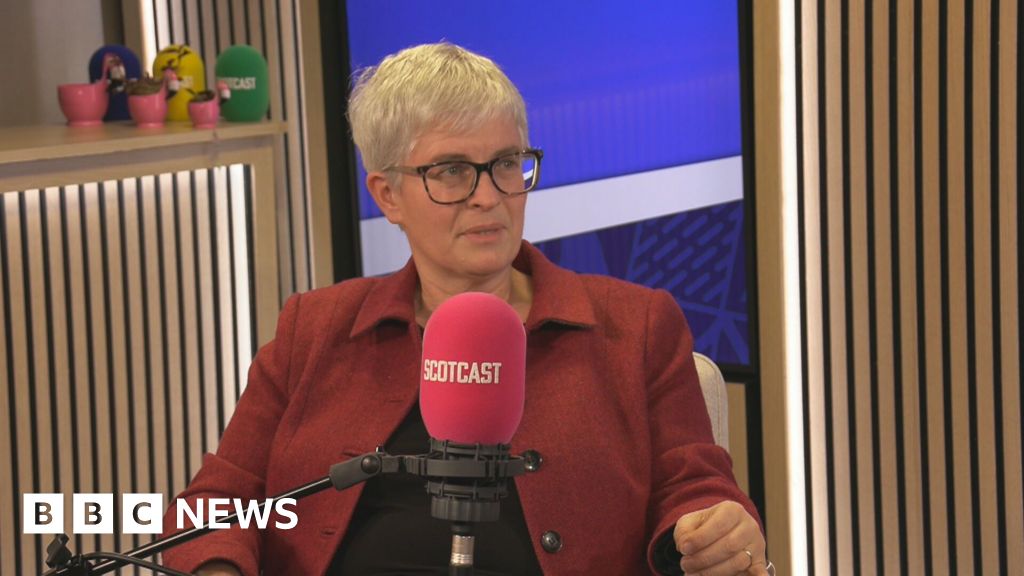
Dr Mirna Guha, a senior lecturer in sociology at Anglia Ruskin University in Cambridge, spoke about her research into experiences of gender violence and social justice in marginalised communities.
She said the public service often claimed that victims and survivors did not come forward because of community pressures.
“While that might be true, in my research on the needs and vulnerabilities of black and racialised victim survivors in the Eastern region, I’ve noticed that a large number of victim survivors do come forward,” she said.
“But, unfortunately, they feel like their voices and their needs are not centred by the criminal justice system.
“So I think it’s incredibly important that organisations, public sector organisations, take a very honest look at themselves and their own organisational cultures and their levels of competence and really think about what they need to do to be able to centre victims’ and survivors’ voices and address their needs and vulnerabilities in a meaningful way.”
- A list of organisations in the UK offering support and information with some of the issues in this story is available at BBC Action Line.