





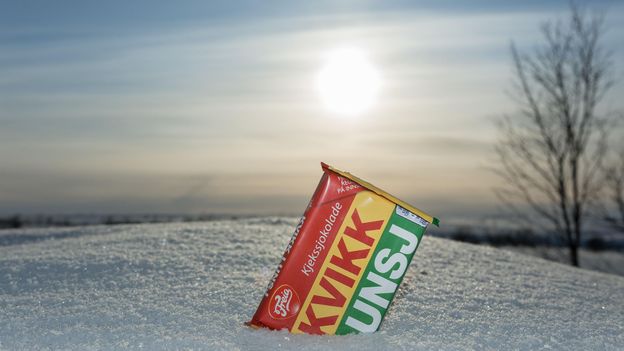
In the 88 years since its launch, these energy-packed “quick lunches” have been marketed in much the same way as trail mix or energy bars might be in other nations. “There’s no better livener on your trip than a bar or two,” early ads declared, noting that calorie-wise, each pack contained “the equivalent of one egg and two slices of bread with butter”.
“From day one, it’s been ‘tursjokoladen’,” says Garcia Gabrielsen. In Norwegian, “tur” literally means “trip” – but not just any trip. Unlike a hike, trek or journey, a “tur” is essentially about moving slowly and mindfully through the outdoors. “There’s something about a ‘tur’ for us Norwegians that’s part of us,” says Garcia Gabrielsen. “So, it’s very special, being the stewards of this.”
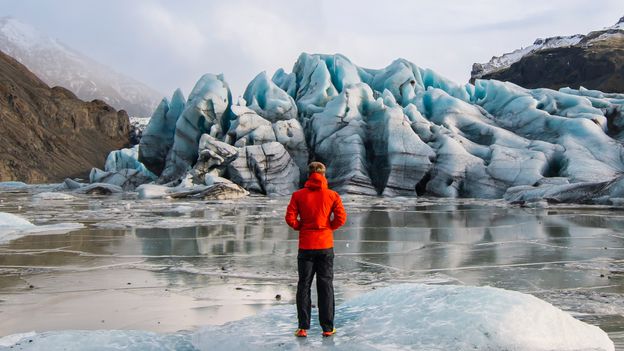
Mention the name Kvikk Lunsj to most any Norwegian and they’ll instantly be transported back to a different time and place. “For me, it’s about the mountains at Easter,” says Magnus Helgerud, a historian and the author of the book Attached to the Cabin: Tracing Norwegian Happiness. “In my mind I’m maybe 10 years old, and I’m sitting in a south-facing snowy slope where we’ve built a fire, and we’re roasting hot dogs and eating oranges and Kvikk Lunsj… [Eating] Kvikk Lunsj is one of many rituals tied to friluftsliv“, says Helgerud, citing the Scandinavian term for “open air living”, which loosely refers to everything from lunchtime forest runs to skiing, biking or swimming in fjords.
As Helgerud explains, nature used to be a workplace throughout Norway, but around the time of Amundsen’s famous expedition, people began to have more time for leisure and “chocolate and friluftsliv became folksy”. In the 1910s and ’20s, industrial innovations, the introduction of the eight-hour workday with two weeks’ paid holiday and encouragement by unions to spend your free time in the fresh air, all incentivised Norwegians to head outside and go “from hard work to sunshine and strength”.